
Dental Fillings in Miami & Hialeah
A cavity can grow even before it hurts. As it progresses, it can cause sensitivity, pain, infection and loss of tooth structure, and may need more involved treatment. At Nova Dental Studio in Hialeah, we assess the remaining healthy tooth structure and whether a filling or another restoration can protect it. Request an evaluation to explore your options.
What is a dental filling?
A cavity is a hole in a tooth, caused by acids from plaque bacteria that break down the enamel. A filling repairs it: the decayed tissue is removed and the space is filled with a sturdy material. Fillings can also fix minor chips or cracks. Tooth-colored fillings use resin composite, a resin base mixed with powdered quartz, silica or glass.
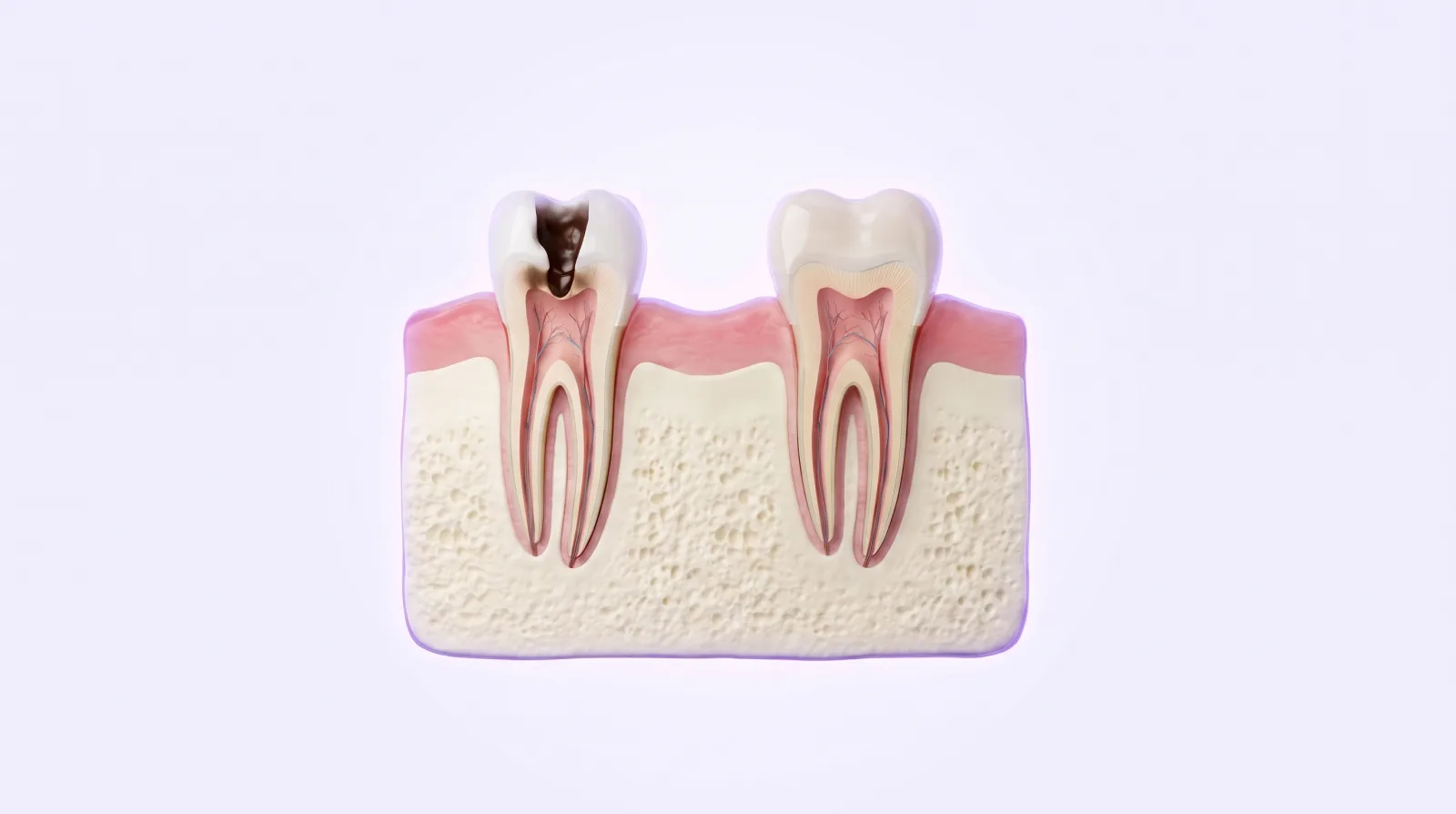
- Cavity Decay that has made a hole in the tooth
- Pulp Nerves and blood vessels inside the tooth
- Tooth-colored filling Fills the space once the decay is removed
Do you need a filling?
You might not feel a cavity until it reaches the deeper layers of the tooth, and X-rays can show cavities you can't see. An exam is the way to know. These signs are worth getting checked.
Signs to get checked
- Tooth pain or an achy feeling, especially after sweet, hot or cold foods and drinks
- Sensitivity to hot and cold
- Pits, holes or dark spots on a tooth
- A minor chip or crack
- An older filling that has broken
- Bad breath or a bad taste that won't go away
When a filling may not be the right fix
- A chalky white spot with no hole yet. Early decay may respond to fluoride treatments
- Too much damage for a filling. An inlay, onlay or crown may fit better
- Decay that has reached the pulp, which calls for a root canal
- A tooth that can't be saved, which may need to come out and be replaced
We check how much healthy tooth remains and explain which option fits before you decide. Tell us about any allergic reaction you've had to dental materials.
How we choose your restoration
The amount of healthy tooth left guides the choice. A small to mid-size cavity can often take a filling, and a larger one may need an inlay, onlay or crown. We show you what we find and go over the options with you.
If dental visits make you nervous, tell us. We numb the area with local anesthesia, and nitrous oxide is the sedation option we offer if it suits your health.
Blends with your tooth
Composite is tooth-colored and can be used on front or back teeth.
Usually one visit
A composite filling is usually finished in one appointment, often in an hour or less.
Treats the decay
Removing the decayed tissue helps stop that cavity from growing and can help you avoid more involved treatment.
Tooth-colored filling
Resin composite is placed directly in the tooth and hardened with a curing light. According to the ADA, it offers good durability in small to mid-size fillings that handle moderate chewing pressure.
Inlays and onlays
These are custom-made pieces for a tooth with too much damage for a filling and enough healthy structure to avoid a crown. They usually take two visits.
Crowns
A crown covers most or all of the visible tooth. It's used when decay is extensive and little healthy structure remains, or to protect a weak or cracked tooth.
How a cavity is filled, step by step
-
Exam and X-rays
We check the tooth for soft spots and may take X-rays. Then we explain what we found and your options.
-
Numbing
We numb the tooth with local anesthesia. Tell us if you feel any discomfort during treatment.
-
Removing the decay
We remove the decayed or damaged tissue. Leaving it behind could let the cavity keep growing.
-
Placing the filling
We keep the tooth clean and dry, place the composite and harden it with a curing light.
-
Polish and bite check
We smooth any rough edges and check that your bite feels normal.
Learn more: Nitrous Oxide Sedation, Children's Dentistry
What to expect after a filling
Most people go back to their routine right after the visit. If you had nitrous oxide, we check that you're fully alert before you leave.
- While you're numb
- The numbness can last 2 to 7 hours. You can eat and drink without damaging the filling, but waiting until it wears off helps you avoid biting your cheek.
- First days
- Some soreness is normal. Over-the-counter pain relievers such as acetaminophen or ibuprofen can help.
- First week or two
- Mild sensitivity and gum soreness are normal and should fade within a week or two.
- After that
- Brush twice a day with fluoride toothpaste, floss daily and keep your regular checkups.
Call us right away if the filling breaks, or if you have severe pain that medication doesn't relieve, a swollen face or jaw, fever or chills.
Call nowFilling or crown?
The choice depends on how much healthy tooth remains. An inlay or onlay can sit between the two when the damage is too large for a filling and the tooth doesn't need a crown.
| Filling | Crown | |
|---|---|---|
| What it restores | The area where decay was removed | Most or all of the visible tooth |
| Usually for | Small to mid-size cavities, minor chips or cracks | Extensive decay, or a weak, cracked or root canal-treated tooth |
| What's removed | The decayed or damaged tissue | A small amount of enamel, to make room for the crown |
| Visits | Usually one | Usually two |
| Temporary needed? | No | Usually, between the two visits |
Learn more: Crowns & Bridges, Root Canals
Possible problems after a filling
Mild sensitivity is common and temporary. These are the problems to watch for and what they can mean.
- Pain when you bite. The filling may be interfering with your bite, and it can be reshaped
- A throbbing toothache. Decay may have reached the pulp, which may need a root canal
- Pain from heat or cold that lingers. The nerve may be damaged, which may need a root canal or an extraction
- A filling that fractures over time, one of the main reasons composite fillings fail
- New decay around the filling, which often appears after three years or later
The ADA reports patient behavior as the most significant factor in how long a composite filling lasts. Daily brushing and flossing, a balanced diet and regular visits all help.
How much does a filling cost in Miami?
The price depends on the tooth and what it needs, so we give you a cost estimate after the exam. These are the things that move it up or down:
- How large the cavity is and how much of the tooth it involves
- Which tooth it is and how many teeth need treatment
- Whether a filling is enough or the tooth needs an inlay, onlay or crown
- What your insurance covers
We work with many dental plans, including Delta Dental, MetLife, Cigna, Aetna and Humana, and we check your coverage before you start. Coverage varies, and the ADA notes that some plans don't cover tooth-colored fillings. Original Medicare doesn't cover most dental care, though some Medicare Advantage plans include dental benefits. No insurance? Ask about our dental membership plan and flexible payment plans.
Call 786-687-0909

























Testimonial
What those who choose us share
Real experiences that reflect the attention, care, and professional approach we offer in every treatment.
Truly this dental office has to be the best medical experience i have ever received! The place is very modern and clean. The staff is incredibly nice. One of the staff member even came outside to the waiting room to great me and offer everyone coffee. I felt very at ease and ready for my treatment.
 VanessaGoogle
La clinica tiene un equipo de trabajo muy profesional con un trato amable y excepcional quedé muy complacida con mi procedimiento y la rapidez con que lo manejaron. Gracias.
 Diana ShirleyGoogle
Very professional and friendly staff. clean and modern environment. All new Equipment that is minimally, invasive. Fair pricing, and accepted my Insurance. I would 10 out of 10 recommend.
 TonyGoogle
Dental filling questions
How long do fillings last?
Cleveland Clinic says fillings generally last 10 to 20 years, depending on the material. The ADA cites a 2012 study that found about 90% overall success for composite fillings at 10 years, and notes that some studies suggest composites may need replacing sooner than amalgam.
How long do dental restorations last?
Longevity varies with the material, bite, oral hygiene and regular care. No restoration lasts forever.
What is the difference between a crown and an inlay or onlay?
A crown covers most or all of the visible tooth; an inlay or onlay restores a smaller portion when sufficient healthy tooth structure remains.
Does getting a filling hurt?
We numb the tooth with local anesthesia, so it shouldn't hurt during treatment. Tell us if you feel any discomfort. Mild sensitivity or gum soreness afterward is normal and should fade within a week or two.
How long does a filling take?
A standard filling usually takes an hour or less, and a simple one can take about 20 minutes. Larger fillings or several in one visit take longer.
Can I eat after a filling?
Yes. Eating won't damage the filling, but waiting until the numbness wears off helps you avoid biting your cheek. If you eat sooner, chew slowly and carefully.
Can a cavity heal without a filling?
Only at the very start. Fluoride treatments can repair enamel in a cavity that's just beginning. Once a hole has formed, a filling is the usual treatment.
When is it too late for a filling?
If decay reaches the pulp inside the tooth, a filling won't fix it and you'll need a root canal. If too much of the tooth is damaged, an inlay, onlay or crown may be a better fit.
I have old silver fillings. Should I replace them?
An intact silver filling doesn't automatically need replacing. The FDA says the available evidence doesn't show that mercury from amalgam harms the general population, and it encourages other materials for higher-risk groups. If you're pregnant or have a related health concern, tell us and we'll check them with you.
Will my filling whiten along with my teeth?
No. Crowns, veneers and fillings do not whiten like natural teeth. If you're thinking about whitening, mention it at your evaluation so we can go over what to expect.
Do you do fillings for children?
Yes. We see children for examinations, cleanings, preventive care, fillings and extractions according to their needs, and we explain each step in a friendly way.
Can I finance restorative treatment?
Our team can explain available financing and payment options, subject to eligibility and provider terms.
Sources
Page updated
- Cleveland Clinic, Dental Fillings
- Cleveland Clinic, Cavities
- Cleveland Clinic, Dental Crowns
- American Dental Association, MouthHealthy: Composite Fillings
- American Dental Association, Materials for Direct Restorations
- MedlinePlus, Dental cavities
- U.S. Food and Drug Administration, Dental Amalgam Fillings
- Ástvaldsdóttir et al., Longevity of posterior resin composite restorations in adults, Journal of Dentistry, 2015
- Healthline: how long a filling takes
Have questions? Call us.
We'll answer them on the phone and find a time that works for you.
Related treatments
Call us to book your visit
Calling is the fastest way to get an appointment and answers about cost and insurance.
Monday to Friday, 9 a.m. to 5 p.m. Saturday by appointment.
Can't call right now? Leave your details. Our front desk will check availability and confirm your appointment.